

Source: full archived interview on YouTube. This article discusses an archived interview; it does not announce a new interview.
Source: full recorded interview on YouTube, published by Shawn Ryan Show. This feature revisits a recorded conversation; video playback is not promised.
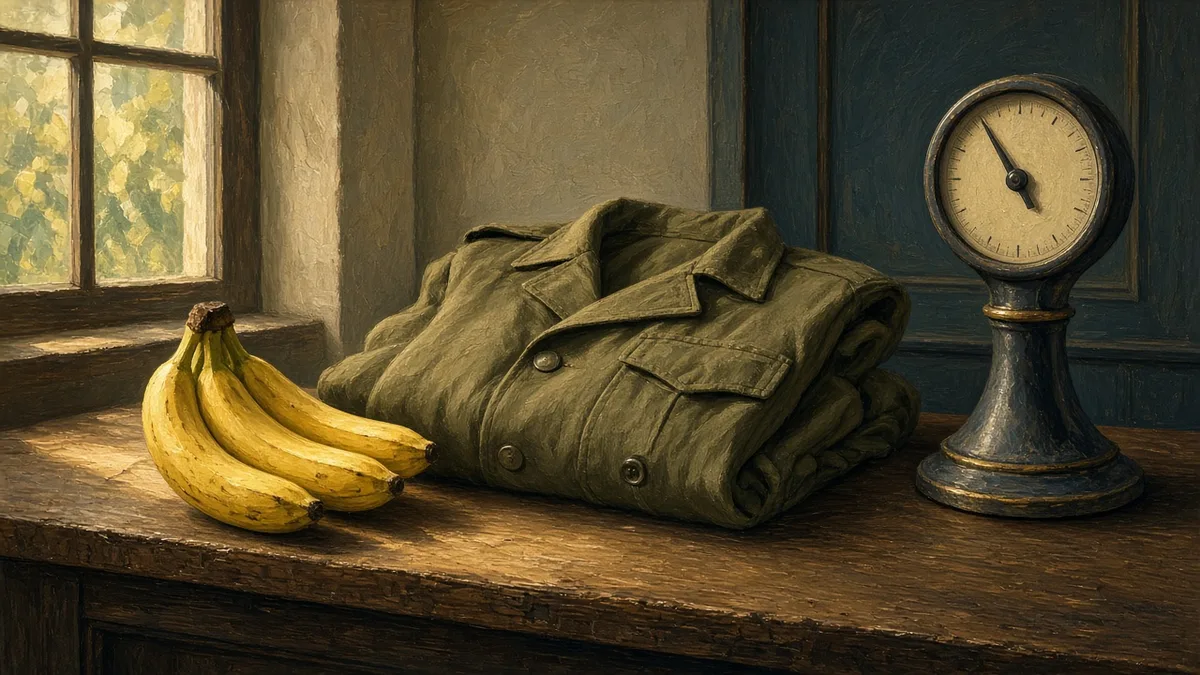
Before Frank Wright became a Marine Raider, he had two problems at the recruiting office: he was too young and did not weigh enough. In his recorded conversation with Shawn Ryan, Wright remembered trying to solve the second problem with five pounds of bananas tucked into his clothing.
The archival conversation preserves a veteran’s humor, not just a service record. Wright did not begin this recollection by reciting campaigns or honors. He began with the practical obstacles in front of a determined teenager: getting the recruiter to accept his age and finding enough weight to qualify.
A teenager at the recruiting office
Asked how old he was when he joined, Wright told Ryan he was 16. He recalled being turned away because of his age and slight build, then returning determined to get into the Marine Corps.
According to Wright, his aunt helped prepare a delayed birth certificate. He remembered the document as uncertified and believed the recruiter was willing to overlook problems with the paperwork. That is his explanation of what happened, rather than a finding based on an examined enlistment file.
The weight story is similarly specific. Wright said he bought five pounds of bananas and placed them inside his blouse. When Ryan asked what he had actually weighed, Wright could not remember. He remembered the added weight being enough, while suspecting the sergeant had helped the paperwork along too.
What other accounts establish
The World War II Foundation’s documentary summary also describes Wright joining at 16 and putting bananas in his pockets to meet the weight requirement. Its account says he used his brother’s identification to appear older.
Those details support the outline of the story without settling every part of how the age documentation was prepared. Wright’s conversation with Ryan centers on his aunt’s involvement; the Foundation’s summary centers on the borrowed identification. Neither is reproduced here as a verbatim recruiting record.
Task & Purpose’s earlier profile places his departure for boot camp in 1942, after the attack on Pearl Harbor. That reporting likewise describes his determination to enlist despite his age and weight, then follows the service that came after the recruiting-office anecdote. It describes eating bananas and a stamped delayed birth certificate, rather than matching every detail of Wright’s account to Ryan. These later versions should not be combined into a single verified sequence.
The uniform and the work beyond it
Wright also gave Ryan a less solemn reason for choosing the Corps: he liked the uniform and thought it would help him attract girls. He told that part with the same self-deprecating humor as the bananas story. That admission gives the younger Wright recognizable teenage motives alongside his determination to serve, rather than treating him only as a figure in a military history.
The contrast is striking because the later history was anything but light. The Foundation describes Wright joining the Marine Raiders, seeing combat in the Solomon Islands and subsequently serving with the 3rd Marine Division. It also recounts his fighting on Guam and Iwo Jima and being wounded.
Task & Purpose identifies him with the original 4th Raider Battalion. Together, those accounts place the youthful enlistment story within a documented public history of Marine service, rather than leaving it as an isolated recruiting-office joke.
Remembering the person before the uniform
The Shawn Ryan Show’s own episode page introduces Wright through his wartime service and later work as a drill instructor. His interview adds the personality that a short service summary cannot capture.
He remembered being eager, underweight, impressed by the uniform and certain he wanted in. The humor does not resolve every discrepancy between later tellings. It does preserve something more personal: how Wright chose to describe the teenager who stood at the beginning of that military life.
FAQ
How old did Frank Wright say he was when he enlisted?
Wright recalled joining the Marines at 16. His recruiting-office details are recollections, not findings from an examined enlistment file.
Do all accounts describe the bananas in the same way?
No. Wright told Shawn Ryan he carried bananas in his blouse; the Foundation describes pockets, while Task & Purpose describes eating them. The different tellings remain distinguished.