

Quick answer: On Crush Live Poker, a caller named Brandon described a $2-$5 hand at Mohegan Sun where his opponent shoved $750 the instant the river paired the board, then stared him down. Bart Hanson explained why that kind of bet pacing is, in his view, "the most important live tell." Brandon called with sevens and fives, and the opponent quickly mucked.
Source: Crush Live Poker with Bart Hanson, "The #1 Live Tell Bart ALWAYS Watches For," clipped as a YouTube Short.
The hand
It was a $2-$5 no-limit game at Mohegan Sun, eight-handed, with $1,075 effective stacks. The villain, who Brandon described as a man in his 60s who played "very loose passive" before the flop but "had some moves" after it, limped from the cutoff. Brandon raised to $25 on the button with 8♣7♣, and the limper called.
The flop came K♠10♣5♣, giving Brandon a flush draw. The limper led out for $100, a "donk bet" into the preflop raiser. On the 7♠ turn he bet again, this time $200, and Brandon called with a pair of sevens and his draw.
Then the river came the 5♠. The board paired, the clubs missed and a third spade arrived. "Without even giving it much thought," Brandon says, the opponent "just moves all in for $750."
Why speed matters
Bart is not a fan of reading pulses or faces. "I'm not a guy that like looks at somebody's carotid artery," he says. But timing is different. "I think the most important live tell is bet pacing."
His idea is simple. Some cards should make any thinking player slow down, whatever they hold. When the board pairs and a flush card hits at the same time, a player with a strong hand should take a moment to plan the best value bet, and a player who is bluffing should take a moment to decide whether the bluff still makes sense. "If there's a situation where a certain card dictates that they should take time no matter what they have and they don't," Bart says, "then it's usually a bluff."

The death stare
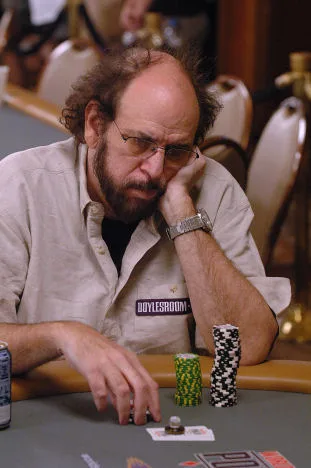
The speed was only part of it. When the opponent shoved, Brandon says, "he immediately turned to me and just like started staring at me." That fits an old idea in live poker tells: players who are weak often act strong, and a hard stare can be an act.
Brandon used a little table talk to test it. He asked the man whether he had a king. "He immediately turned away. He broke eye contact with me."
That was enough. Brandon called, and the opponent quickly mucked his hand.
A read, not a rule
What makes the clip useful is that Brandon doesn't oversell it. He says live reads are "not exactly something I specialize in" because he doesn't usually trust them. Without the snap shove and the "fake death stare," he says, he would have folded. Bart calls it "an actual live read spot."
That's the honest version of how tells work. A single tell is rarely enough. Here, the river card made the timing meaningful, and the stare and the broken eye contact pointed the same way. Bart's point is that the timing tell is the one worth watching first, because it depends on the situation, not on someone's personality.

More on RealNameOf:
- Bart Hanson on the river donk 3-bet bluff
- Bart Hanson on folding sixes full after two all-ins
- Poker players' real names
FAQ
What is bet pacing in poker? It's how long a player takes before betting. Bart Hanson's view is that when a card should make anyone stop and think, an instant bet is often a bluff.
What did the opponent have? We don't know. He mucked his hand after Brandon called, so his cards were never shown.
What did Brandon call with? 8♣7♣, which made sevens and fives on a K♠10♣5♣7♠5♠ board.
Who is Bart Hanson? Bart Hanson is a live cash game pro and coach who runs the Crush Live Poker training site and podcast.