

Quick answer: On The Connect with Johnny Mitchell, a former Florida pill mill operator named Derik says that when the feds raided, his clinics had 27,000 active patient files. He says they kept paying the leases on offices they were forced out of so no rival could move in, and paid homeless men to hand out flyers pointing returning patients to the new location.
Source: The Connect: With Johnny Mitchell, "How a Florida Pain Clinic Became America's Biggest Pill Mill," clipped as a YouTube Short.
Who is Derik?
The episode calls him only Derik. Its description says he helped run "a massive pill mill operation" at the height of Florida's opioid epidemic, that he met "the George brothers," and that he ended up "facing federal racketeering charges and a 20-year prison sentence."
Those details match the public record of Derik Nolan, a longtime friend of twin brothers Chris and Jeff George. According to federal prosecutors, the Georges ran four Florida pain clinics, including American Pain, that from 2008 to early 2010 handed out about 20 million oxycodone pills and made more than $40 million. Nolan, who handled security at one of the clinics, pleaded guilty in 2011 to racketeering conspiracy and was sentenced to 168 months, or 14 years, in federal prison. CNN later reported that he served 10 years.
"27,000 active files"
"When the feds raided, we had 27,000 active files," Derik says. "27,000 people who came every single month." That number is his own; it doesn't appear in the prosecutors' public statements we checked.
What the record does confirm is how far people traveled. Prosecutors said addicts and dealers came from Tennessee, Ohio, Kentucky, West Virginia and elsewhere. Derik names Kentucky, Ohio and West Virginia too, and says one patient came from Oregon once a month.

Keeping the empty leases
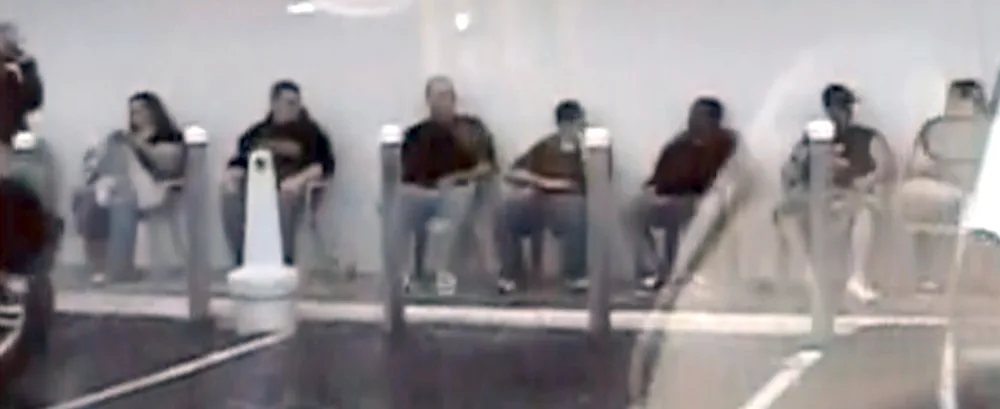
The part of the clip that stands out is the business strategy. When they got kicked out of an office, "run out by the police or whatever," Derik says, they kept the lease and let the building sit empty.
The reason was competition. His patients were driving in from out of state, often high, he says, and wouldn't notice if somebody else opened the same kind of clinic in the same spot under a new name with a different doctor. "They wouldn't care anyway," he says. A new clinic in the old spot would just mean they had two places to go. So, he says, "to hold off the competition, you just keep the leases." By the time they were shut down, he says, they had four locations.
The men with the flyers
They also left someone behind. Derik says they befriended local homeless men, whom he describes as "pretty nice, funny guys," bought an old car, parked it in front of the old office and let them live in it. Every day, he says, the men got a fresh delivery of flyers.
The point was to catch returning customers. "People were still driving there" years later, he says, after coming "out of jail, or whatever it may be," remembering "this awesome place." He recalls one man, Solomon, standing outside "in his cowboy hat, in his sweatpants," handing them a flyer so "they'd find their way to where we were."
All of this is Derik's own account of how the operation worked. None of it appears in prosecutors' public statements, but it fits what investigators described: a cash business built to keep pills moving to people who kept coming back.

Real-name note
The Connect is hosted by Johnny Mitchell. The guest, introduced only as Derik, matches Derik Nolan, who was sentenced in the George brothers' pill mill case.
More on RealNameOf:
FAQ
Who is Derik on The Connect? The episode only uses his first name. His story matches that of Derik Nolan, a friend of Chris and Jeff George who pleaded guilty to racketeering conspiracy in the George brothers' Florida pill mill case.
How big were the George brothers' pill mills? Federal prosecutors said the four clinics handed out about 20 million oxycodone pills and made more than $40 million from 2008 to early 2010.
Did the pill mill really have 27,000 patients? That is Derik's claim. He says they had 27,000 active files when the feds raided.
Why did they keep empty leases? Derik says it was to stop competitors from opening in their old offices and picking up their returning patients.