


Quick answer: On the Julian Dorey Podcast, John Van Duyn of the Medieval Mindset channel explains how the Knights Templar became medieval Europe's bankers and lent heavily to King Philip IV of France. On Friday, Oct. 13, 1307, Philip had the Templars in France arrested. Torture produced confessions of heresy, and within a few years the order was abolished and its last grand master burned at the stake.
Source: Julian Dorey Podcast #494 with John Van Duyn (Medieval Mindset), clipped as a YouTube Short.
The knights who became bankers
Van Duyn, who covers the Middle Ages on his Medieval Mindset YouTube channel, starts with money. The Templars were a military order founded around 1119 to protect pilgrims traveling to the Holy Land. They ended up running a network of houses from England to the Levant.
He calls their system "the world's first credit system." That's his framing, since bankers in Italy and elsewhere were developing similar tools around the same time. The basic idea is well documented, though. A pilgrim or noble could deposit money or valuables at one Templar house and draw on them somewhere else, so they didn't have to carry silver along dangerous roads. Over time the Templars also held deposits and made loans, and they handled the finances of popes and kings. In Paris, the Temple worked for decades as something close to the French royal treasury.
A king deep in debt
Philip IV, known as Philip the Fair, spent heavily on wars with England and Flanders and was always short of money. Historians note that he owed the Templars large sums, including a loan of 500,000 livres around 1299. He had already gone after other creditors and sources of cash: he expelled the Jews of France in 1306 and took their property, and he squeezed Lombard bankers.
Van Duyn also tells the story that Philip asked to join the order and was turned down. That story is often repeated, but it is hard to pin to a solid contemporary source, so it is best treated as part of the legend.
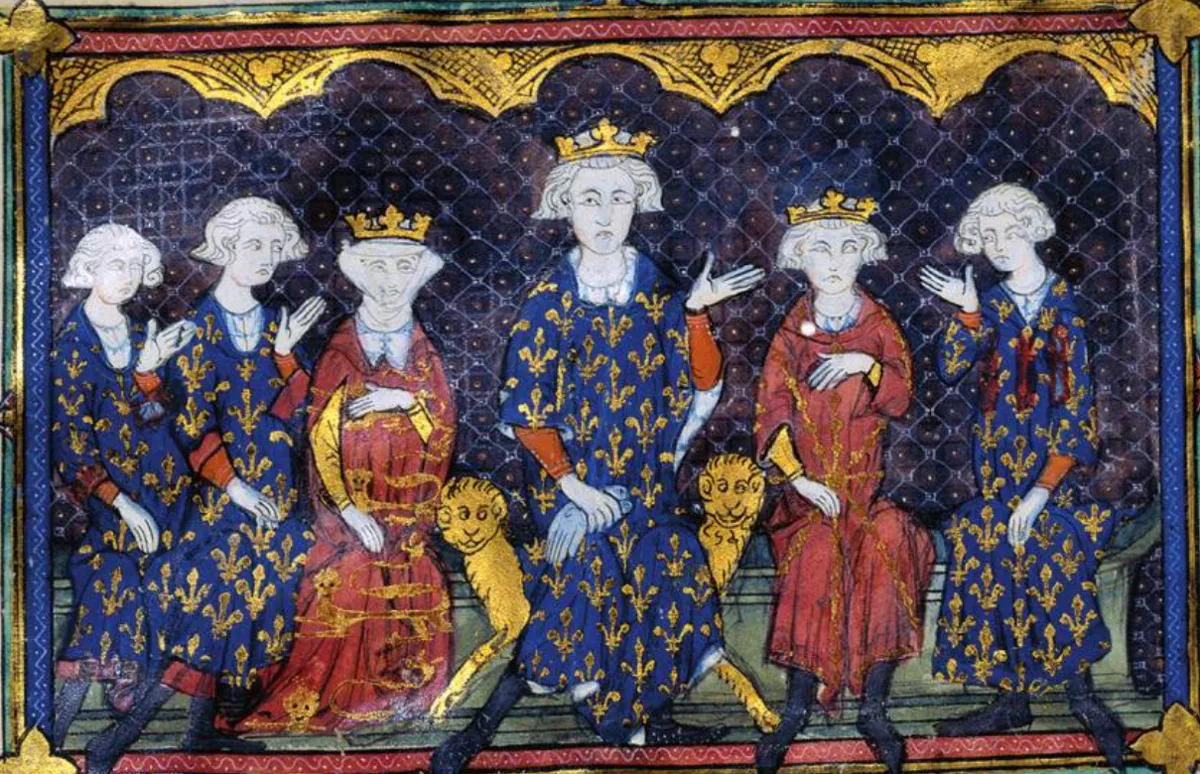

Friday the 13th
At dawn on Friday, Oct. 13, 1307, Philip's officers arrested Templars across France at the same time, including Grand Master Jacques de Molay. The charges were lurid: denying Christ, spitting on the cross, idol worship and indecent initiation rites.
Torture produced confessions. De Molay confessed within two weeks, repeated it before members of the University of Paris, and later took it back. In the clip, Van Duyn describes a council at the University of Paris piecing the evidence together. The documented history is more careful than that: Philip asked the Paris theologians for an opinion in 1308, and their answer was cautious. Many Templars recanted their confessions once they were out of the torturers' hands. In May 1310, 54 of them were burned as relapsed heretics.
Ten years? About seven
Van Duyn says the order was gone in about ten years. The real timeline was shorter. Under pressure from Philip, Pope Clement V dissolved the Templars in 1312 with the bull Vox in excelso at the Council of Vienne. On March 18, 1314, de Molay and Geoffroi de Charney publicly withdrew their confessions in Paris and were burned that evening. That's about seven years from the arrests to the burning.
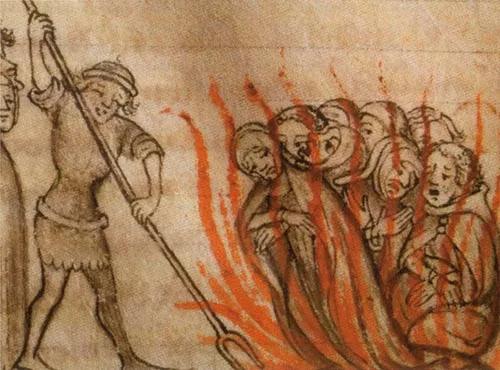

Much of the order's property went to the Knights Hospitaller. The king's debt, as Van Duyn tells it, was no longer a problem.
More on RealNameOf:
- Another Julian Dorey story: the Hollywood Bandit's prosthetic disguise
- Venice's 40-day plague quarantine
- Religious names and real names
- More celebrity and podcast news
FAQ
Why did Philip IV arrest the Knights Templar? Historians point to a mix of motives: his debts to the order, a desire for its wealth, and his wider campaigns against people he owed money. The official charges were heresy and blasphemy.
When were the Templars arrested? At dawn on Friday, Oct. 13, 1307.
When was the Templar order dissolved? In 1312, when Pope Clement V issued Vox in excelso at the Council of Vienne.
What happened to Jacques de Molay? He recanted his confession and was burned at the stake in Paris on March 18, 1314.