

Arthur Brooks, billed in the episode title as a happiness expert, has a short formula he wants people to remember. On This Past Weekend, he lays it out for the host as simple arithmetic: pleasure plus people plus memory equals enjoyment.
Clip: Viral Podcast Shorts YouTube Short from the full source linked below.
The clip is short and practical. He uses two everyday pictures to make the point, a beer commercial and a turkey coming out of the oven, and he keeps coming back to the same idea. Pleasure on its own is missing something.
Pleasure is not the problem
Brooks starts with a blunt line: "the pleasure is not the road to happiness." But he is careful not to turn that into a lecture against enjoying things. There's "nothing wrong with pleasure," he says, "but it's incomplete."
What completes it, in his view, is two ingredients. "You got to add people and memory to it," he says. The payoff, as he puts it, is control: "you can manage your pleasures and they don't manage you. That's enjoyment."
The formula
When the difference is put to him one more time, Brooks repeats it as an equation: "pleasure plus people plus memory equals enjoyment."
He adds that it has to be "conscious and memorable." Then he gives the practical test. "When you're doing something really pleasurable and you're doing it alone," he says, "you're probably doing it wrong."
That's why, he says, people are "so critically important." In his framing, the company you keep is not an extra. It is a core part of the recipe.
What beer ads already know
His first example comes from advertising. Brooks points out that a beer company doesn't make an ad showing "a dude alone in his apartment pounding a 12-pack." That, he says, doesn't look good in an ad.
The reason, in his telling, is that a man drinking alone is pleasure, not enjoyment. So the ad shows "the guy with his buddies." Brooks spells out what the ad is really selling: "beer plus people he loves plus memories that they're making together. That's enjoyment."
"That's the recipe," Brooks says. The exchange then lands on a simple summary: you'll get enjoyment "if you include other people," and by making a memory.
It's an easy example to picture, which is the point. Advertisers, he suggests, already understand the formula, even if they wouldn't describe it that way.
Dad and the camera at Thanksgiving
The second example is personal. Brooks talks about memory as the part that makes enjoyment last, and he stresses again that it has to be conscious. Once you remember it, he says, it becomes permanent. In his framing, the remembering is what keeps a good moment from disappearing.
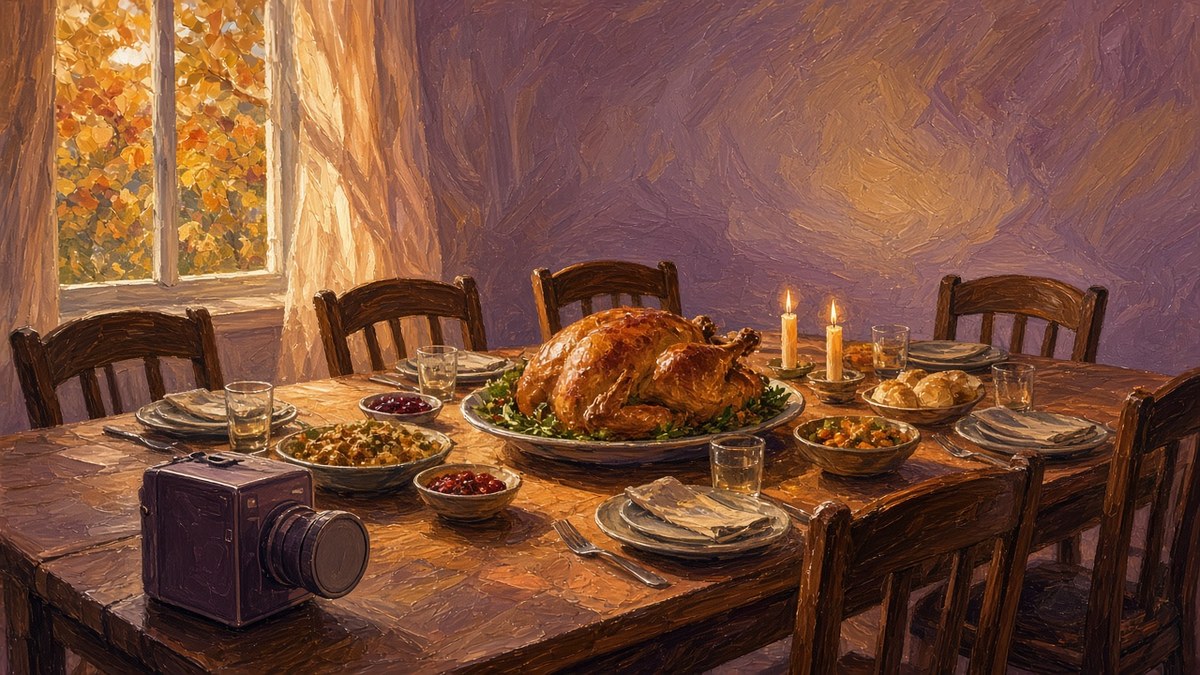
Then he goes back to his childhood. His mom was a good cook, he says, and his family had Thanksgiving at their house every year. Every year, they would open up the oven to a beautiful turkey, and his dad would say, "Get the camera."
The camera came out every year, and Brooks is clear about what the habit meant. "The whole point was he was trying to make it memorable," he says. "And that's what Thanksgiving dinner was all about."
He ends the thought with three words: "That's your life."
Why it lands
The clip isn't a study or a list of rules. It is Brooks offering a way to think about an ordinary good time. Food, a drink or a holiday meal can be pleasant on its own. In his telling, it becomes enjoyment when other people are there and someone makes the effort to remember it, even if that means a dad reaching for the camera every year.
Related reading
- Theo Von's real name
- How Johnny Hamcheck got his name, told to Theo Von
- Same eggs, different prices on Instacart, from This Past Weekend
FAQ
What is Arthur Brooks' formula for enjoyment?
In this clip, he says pleasure plus people plus memory equals enjoyment.
Does Arthur Brooks say pleasure is bad?
No. He says there's nothing wrong with pleasure, but it is incomplete without people and memory.
What is the beer ad example?
He says beer ads show a guy with his buddies, not a man alone in his apartment, because that's enjoyment rather than pleasure alone.
What is his Thanksgiving story?
He says his dad would call for the camera every year when the turkey came out of the oven, because he wanted to make the moment memorable.