

Quick answer: The "Smiley Face Killers" is a theory, not a confirmed case. Retired NYPD detectives Kevin Gannon and Anthony Duarte, with criminal justice professor Dr. D. Lee Gilbertson, argue that an organized, cult-like gang has killed dozens of young men since the late 1990s, mostly near rivers along the I-94 corridor, and painted smiley faces near the scenes as a signature. In 2008 the FBI said it had found no evidence linking the deaths or showing a serial killer, and that most appeared to be alcohol-related drownings. Local medical examiners ruled most of the deaths accidental drownings or undetermined, and a 2010 Center for Homicide Research brief rejected the theory. Only one listed death, Chris Jenkins's in Minneapolis, was reclassified as a homicide (in 2006), and police said it was unrelated to the others. No one has been charged, and no ritual has ever been documented.
Prefer to watch? Our full documentary above covers every case in this article.
Contents: The theory in brief · The men behind it · Case table · Minneapolis · Going public · The signature · Sinsinawa Avenue · Michigan · La Crosse · Pennsylvania and Boston · Pittsburgh · The case against · What remains · FAQ · Sources
What is the Smiley Face Killers theory?
A young man leaves a bar after a night out. He's popular, athletic and close to finishing college. Somewhere between the bar and home, he disappears. Days or weeks later he's found in a river or a lake. He'd been drinking, the water was close by, and the death is ruled a drowning. It's a tragedy, and the file gets closed.
That story has repeated itself in college towns across the upper Midwest and beyond for decades. Most people, including most of the officials who investigated, see a grim but understandable pattern: alcohol, cold nights, darkness and water a few blocks from the bars.
Two retired New York City detectives and a Minnesota professor see something else. In their view, many of these young men were abducted and killed by an organized group, a "cult-like gang" with members in several cities, and the killers left a calling card near the water: a crude painted smiley face. Sometimes, they say, the smiley wore horns. Sometimes it wore a crown.
This article lays out that theory in detail, because it's the reason the phrase "Smiley Face Killers" exists. It's also the theory of three specific men, and it has not been proven. Wherever we describe their claims, we say so, and we put the official findings right beside them. These were real people with real families, and both the theory and the rulings deserve a fair hearing.
The men behind the theory: Gannon, Duarte and Gilbertson
A promise to a family
The story begins in New York City in 1997. Patrick McNeill, a student at Fordham University, was last seen at a bar on the Upper West Side called the Dapper Dog. Weeks later his body was found floating near a pier in Brooklyn. The medical examiner didn't call it a homicide, and didn't call it an accident either. The death was ruled undetermined.
One of the detectives who worked the case was Kevin Gannon of the NYPD. According to ABC News and Milwaukee Magazine, Gannon says he promised Patrick's parents he would never give up on their son's case. He wasn't a hobbyist. Milwaukee Magazine reported that he spent 20 years with the NYPD, rose to detective sergeant, and worked homicide, sex-crimes and missing-persons squads. Colleagues called him "Spider."
He kept the promise after he retired, and as he kept digging, he says, Patrick's death began to look like one piece of something much bigger.
The team
Gannon partnered with another retired NYPD detective, Anthony Duarte. They then brought in an academic: Dr. D. Lee Gilbertson, a criminal justice professor at St. Cloud State University in Minnesota who specializes in gangs and spatial analysis, the study of where crimes happen on a map.
The three began collecting cases from across the country: young men who went missing after drinking and were later found in rivers and lakes. According to Milwaukee Magazine, news reports pointed them to roughly 70 such deaths, which they narrowed to about 40 they considered suspicious. They formed a private firm, Nationwide Investigations, and Gannon said he mortgaged his house to keep the work going.
Their method
The team's method was unusual. They told CNN in 2008 that instead of starting where a body was found, they worked backward. Using GPS and the flow of each river, they estimated where each young man probably entered the water. Then they visited those spots in person and searched them.
Duarte told CNN why he believed water was the perfect cover: it makes for an "almost perfect crime," because water destroys so much evidence.
As the list grew, the team says, they noticed something at the entry points besides the water. It was a smiley face.

Smiley Face Killers case table
The table below lists the cases most often discussed in connection with the theory, with each one's official ruling as publicly reported. Being on this list does not mean a death was a homicide.
| Name | Year | Place | Official ruling / status | |---|---|---|---| | Patrick McNeill | 1997 | New York City (Brooklyn waterfront) | Undetermined | | Nathan Kapfer | 1998 | La Crosse, Wisconsin | Drowning; BAC 0.22 reported, no sign of foul play reported | | Jeffrey Geesey | 1999 | La Crosse, Wisconsin | Drowning; BAC 0.42 reported | | Chris Jenkins | 2002 (found 2003) | Minneapolis, Minnesota | First "unknown"; reclassified as homicide, Nov 2006; no charges; police said unrelated to other drownings | | Josh Guimond | 2002 | Collegeville, Minnesota (St. John's University) | Missing person, never found; not a drowning case | | Jared Dion | 2004 | La Crosse, Wisconsin | Drowning; no injuries or sign of foul play found | | Todd Geib | 2005 | Casnovia, Michigan | Accidental drowning per Michigan State Police (Oxygen describes it as undetermined) | | Matt Kruziki | 2005 (found 2006) | East Dubuque, Illinois | Undetermined (coroner's inquest) | | Cullen Fortney | 2006 | La Crosse, Wisconsin | Survived; police found no foul play | | Lucas Homan | 2006 | La Crosse, Wisconsin | Accidental drowning, acute alcohol intoxication a major contributing factor | | Abel Bolanos | 2007 | Ames, Iowa | Preliminary autopsy: accidental drowning | | Thomas "Tommy" Booth III | 2008 | Woodlyn, Pennsylvania | Accidental drowning | | William "Will" Hurley | 2009 | Boston, Massachusetts | DA: "does not appear suspicious" | | Dakota James | 2017 | Pittsburgh, Pennsylvania | Accidental drowning (Allegheny County ME) |
Halloween in Minneapolis: the case of Chris Jenkins
If the smiley face theory has a cornerstone, it is the death of Chris Jenkins.
On Halloween night, October 31, 2002, Chris Jenkins, 21, a University of Minnesota student, was out in costume in downtown Minneapolis at the Lone Tree Bar & Grill. At some point he left the bar. The Hennepin Avenue Bridge over the Mississippi River was not far away. Then he disappeared.
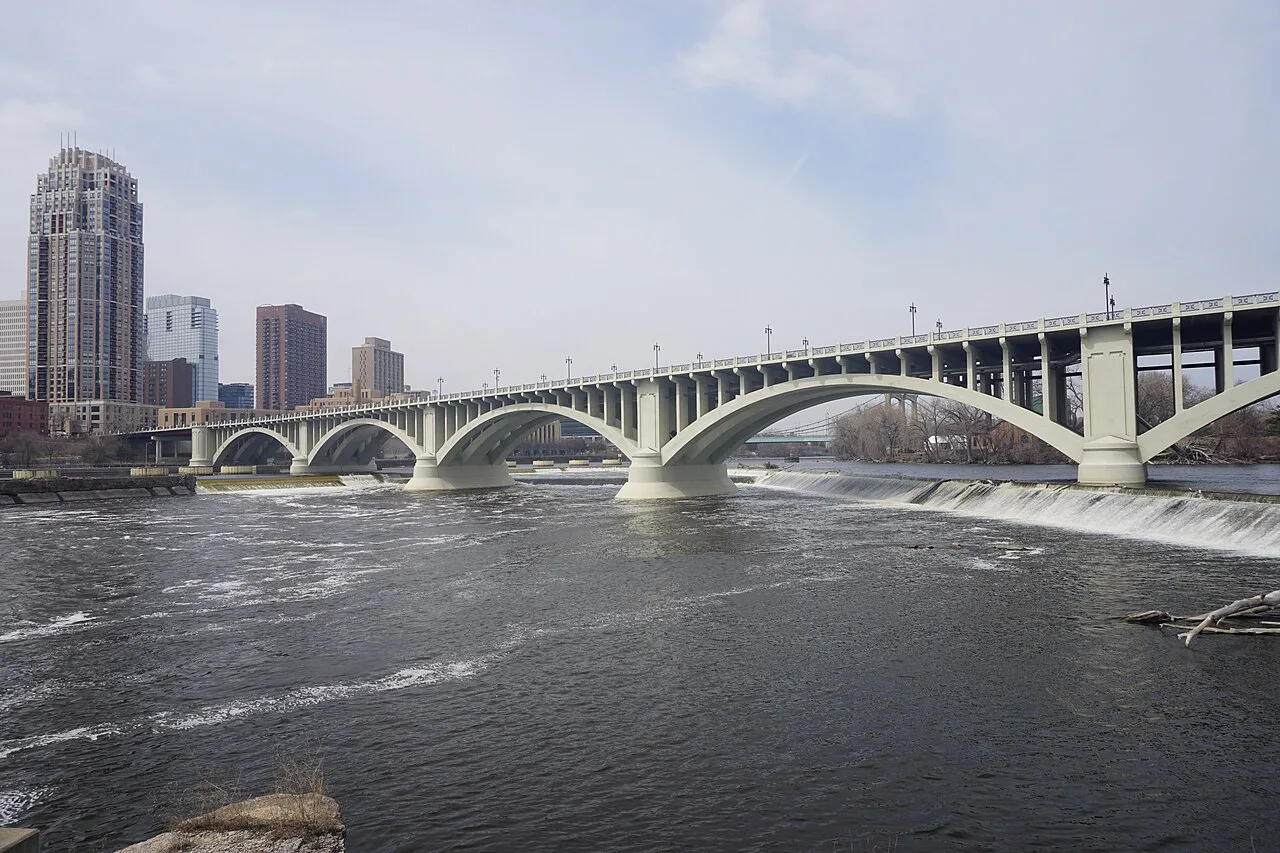
Four months later, in February 2003, his body was recovered from the Mississippi beneath the Third Avenue Bridge, still in his Halloween costume. The cause of death was drowning, and the manner was listed as unknown. At first, investigators assumed accident or suicide.
His family didn't accept that. They hired a private investigator, Chuck Loesch, and kept pressing.

Reclassified as a homicide
In November 2006, Minneapolis police did something rare. They reclassified Chris Jenkins's death as a homicide. Police Chief Tim Dolan apologized publicly, saying, "We made an assumption," according to Minnesota Public Radio. Sergeant Pete Jackson said investigators now believed Chris had been thrown from the bridge, based in part on an eyewitness held out of state.
No one has ever been charged.
Here it's important to be exact. Minneapolis police also said his death was not related to the other drownings. Officially, his case stands alone. It is the one official homicide on the list, and it is not official proof of any link.
To the detectives, though, it was proof that at least one "drunk drowning" had not been an accident. A TV report at the time also said his body was found with the hands folded across the chest, a detail reported by media but not confirmed by police. If one of these drownings was murder, the detectives asked, how many others were too?
Going public: "40 young men, 25 cities, 11 states"
The FBI meeting
In late October or early November 2007, Gannon, Duarte and Gilbertson met FBI agents in Minneapolis and laid out the cases, the maps and the graffiti.
There was another source behind their theory. According to a later FBI letter to Rep. Jim Sensenbrenner, dated August 21, 2008 and reported by Milwaukee Magazine, much of the theory came from a prison inmate who claimed he had founded a criminal group. We are not naming him. He has never been charged in connection with any of these deaths, and his claim has never been backed up. According to that letter, as reported, the Bureau did not find his claims credible. That split, a source the detectives took seriously and the FBI did not, would follow the theory for years.
The story breaks
In April 2008 the detectives went public. KSTP-TV in the Twin Cities broke the story, and ABC News and Fox News followed. Their claim, as reported by Fox: 40 young men in 25 cities across 11 states had been killed by a gang, and these were murders made to look like drownings. Gilbertson told reporters, "We have discovered physical forensic evidence that suggests homicide." The team has never released all of that evidence publicly. Later tallies, including Wikipedia's summary, put the list at about 45.
The detectives' strongest arguments
This is the spine of the theory. Below are the main arguments Gannon, Duarte and Gilbertson have made, in their strongest form, each with the response from officials or researchers. Every point in this section is their claim unless we say otherwise.
1. The I-94 pattern
Gilbertson's students used spatial analysis and claimed that 94 percent of the deaths fell within 100 miles of Interstate 94, the highway that runs from Montana through Minneapolis, Wisconsin and Chicago into Michigan (Milwaukee Magazine). To the team, that kind of clustering suggests a group that moves along a travel corridor, the way a crew might work a route.
The response: I-94 runs through one of the densest belts of colleges, bars and rivers in the country. A cluster along it is what you'd expect from accidents too.
2. A victim profile
The team says the victims fit a type: mostly fit, white, college-age men, often popular, often athletes, who got separated from friends after drinking. To them, that looks like targeting, not chance.
The response: Young men who drink heavily and walk home alone are, statistically, the group most at risk of drowning. A profile can come from risk, not a predator.
3. Bodies that don't fit the water
In several cases the detectives, and some pathologists they worked with, point to bodies that they say showed less decomposition than expected, were found in places they say river flow wouldn't carry them, or turned up in water that had already been searched. They argue this means bodies were held somewhere and placed in the water later.
The response: The medical examiners who handled those cases ruled them drownings. Cold water slows decomposition, and currents and recovery conditions vary a great deal.
4. Drugs
The detectives believe victims were drugged with GHB, a so-called date-rape drug, then abducted, held for hours, possibly in a van, and then put in the water. They have claimed that about 30 victims had GHB in their systems (The Daily Beast).
The response: We have found no official toxicology report confirming that figure. GHB can also form naturally in the body after death, which makes post-mortem results very hard to interpret.
5. The smiley face signature
This is the argument that gave the theory its name, and it gets its own section below.

The signature: plain, horned and crowned smileys
According to Gannon and Duarte, they found 22 smiley faces at or near places where victims went into the water or were found. Most were crude and painted in white. Some had three-pointed crowns. Nine, they say, had horns. At some sites there were words or nicknames nearby, including the word "Sinsinawa" (Milwaukee Magazine; Center for Homicide Research, citing AP).

Why people call it a cult
The horns and the crowns are why the story started being described as a cult. A grinning face with devil horns, left near the water where a young man died, reads like a ritual mark. The team describes a gang with cells in several cities, a shared symbol and a hidden structure, which is why "cult-like gang" is a fair way to describe what the theory claims. In their telling, the smiley is both a signature and a taunt to police: a grin left behind by people who believe they will never be caught.
But here is what the record actually shows. The horned and crowned smileys are the only occult-style detail in this entire case. No ritual has ever been documented. No proponent has shown evidence of a religious or satanic cult, and no police department, medical examiner or court has confirmed one. When we say "cult-like gang," we mean the theory's description of an organized group, not a proven occult order.
"One-thirteenth of the evidence"
Gannon has said the smileys are only part of the picture. "The smiley faces are one-thirteenth of the evidence," he told Milwaukee Magazine. "We found 13 distinct signs, symbols and markings." He has not made the other twelve public.
The team also claims the graffiti usually sits on "the first man-made structure visible" from where the body was recovered, such as a bridge pillar, a wall or a tree near the shore (The Daily Beast).

No official photos
One thing readers often ask is whether they can see the actual graffiti. We could find no official photos released by any police department, district attorney, the FBI or a court. The images that circulate come from the detectives or TV productions. That's why every smiley on this page is a labeled illustration.
Sinsinawa Avenue: Matt Kruziki
The word "Sinsinawa" leads to a riverfront town in Illinois, just before Christmas.
In December 2005, Matt Kruziki, 24, from Wisconsin, was out in East Dubuque, Illinois, a small town on the Mississippi across from Dubuque, Iowa. His father, Bill Kruziki, is a former Waukesha County sheriff and former U.S. Marshal. Matt left a club called the River Queen and was last seen on Sinsinawa Avenue. Then he was gone.
According to Milwaukee Magazine, search bloodhounds tracked his scent to a sand pit beside the river. In March 2006 his body was recovered from the Mississippi at a spot called Deadman's Slough. His blood-alcohol level was 0.09. A coroner's inquest ruled the death undetermined. East Dubuque's police chief, Steve O'Connell, believed Matt tried to walk across the frozen river and fell through, and he called the smiley face theory irresponsible.
The Sinsinawa link, and its problem
Why does a street name matter? Gannon and Duarte said that at a drowning scene in East Lansing, Michigan, they found the word "Sinsinawa" written on a rock. To them, it pointed straight to the street where Matt was last seen.
Milwaukee Magazine pointed out the timeline problem: the East Lansing deaths it was tied to happened in 1997 and 2001, years before Matt ever walked down Sinsinawa Avenue. The Center for Homicide Research later noted that Sinsinawa is a common place name in that part of the Midwest.
Ames, Iowa: Abel Bolanos and "Evil Happy Smiley Face Man"
Abel Bolanos's case is separate from Matt Kruziki's, though the two are sometimes merged online. Abel, 19, was an Iowa State University student from the Chicago area. In spring 2007 he left a party in the early morning hours; campus police said friends had taken his car keys so he wouldn't drive. Days later his body was found at the edge of Lake LaVerne on campus. A preliminary autopsy indicated accidental drowning, and campus police said there was no indication of foul play (Iowa State Daily, April 2007; Milwaukee Magazine dates the discovery to March).
Milwaukee Magazine reported the detail that made his case one of the theory's most quoted: in a drainage ditch connected to his case, there was reportedly a red smiley face with the words "Evil Happy Smiley Face Man."
Iowa State's police had a pointed answer. Deputy Chief Gene Deisinger said of the detectives, "They never called us."
To the detectives, words like that feel like a confession in paint. To local police, it's a claim from people who never asked to see the file.
"I'm in a field": Todd Geib in Michigan
Early on June 12, 2005, Todd Geib, 22, was at a bonfire party in an orchard near his home in Casnovia, Michigan. Sometime that night he wandered away. A friend talked with him by phone, and Todd said he was "in a field." Then he was gone.
About three weeks later his body was found in Ovid Hall Lake, a lake searchers had already looked through. Michigan State Police called it an accidental drowning, and in 2012 a state police lieutenant repeated that conclusion (Lansing State Journal). Oxygen's later series described the death as undetermined.
Why the detectives rank it highly
Gannon and Gilbertson see Todd's death very differently, and it is a chapter in their book. They claim his body showed little decomposition for three weeks in a lake, that his head and shoulders were above the water when he was found, and that a smiley face had been spray-painted on a tree nearby. They also say a smiley sticker later appeared on his grave (Oxygen; Lansing State Journal). Out of respect for his family, we don't show it.
A missing young man, a lake that had already been searched and a grin on a tree: to the theorists, Todd's case is one of their strongest. Officially, it remains a drowning.
La Crosse: the river town
Nearly 280 miles west as the crow flies, across Lake Michigan, La Crosse, Wisconsin, was living a nightmare of its own. The city sits right on the Mississippi, with three colleges and a lively bar strip a couple of blocks from the water. Local police have made the same point: the river is only a couple of blocks from the bars (HeraldNet/AP, 2004).


Nathan Kapfer (1998)
In February 1998, Nathan Kapfer, a 20-year-old Viterbo College student from Glendive, Montana, disappeared after a night downtown. Police had cited him for underage drinking that night. A fisherman found his body in the river that April; his blood-alcohol level was 0.22. According to Milwaukee Magazine, some of his belongings were found neatly arranged near the Indian statue in Riverside Park, a detail the theorists find significant.
Jeffrey Geesey (1999)
In April 1999, Jeffrey Geesey, a 20-year-old UW–La Crosse student, was last seen at a downtown tavern. His body was found in the river in May. The Star Tribune reported a blood-alcohol level of 0.42, an extremely high level. Milwaukee Magazine reported GHB was found too, though, again, GHB can occur naturally after death.
Jared Dion (2004)
In April 2004, Jared Dion, a 21-year-old UW–La Crosse junior and wrestler from Pewaukee, was walking with friends to catch a bus after bar close. They turned around and he was gone. More than a thousand people came to a candlelight vigil. Five days later his body was found at the south end of the Riverside Park levee. His blood-alcohol level was 0.27, and police and state investigators found no injuries and no sign of foul play.
In high school, Jared wrestled at Arrowhead alongside Matt Kruziki. To the theorists, that's one more strange thread. To skeptics, it's what happens when you collect dozens of young men from the same part of the same state.
Cullen Fortney (2006): the one who survived
In January 2006, Cullen Fortney, a 21-year-old UW–Madison student from Viroqua, was visiting La Crosse. He left the bars around 1:45 a.m. and got separated from friends. Sometime later he ended up in the freezing Mississippi, pulled himself onto a concrete slab, and around 7 a.m. walked into Gundersen Lutheran hospital soaking wet, without shoes and with no memory of how he got there (Badger Herald; La Crosse Tribune).
Cullen Fortney survived. Gannon and Gilbertson's book treats him as the lone survivor of the pattern. La Crosse police found no foul play, and his family publicly praised police for how they handled it.
Lucas Homan (2006)
On September 29, 2006, Lucas Homan, 21, vanished after an Oktoberfest night out. On October 2 his body was found near the Mississippi shore. The ruling was accidental drowning, with "acute alcohol intoxication a major contributing factor." He was the eighth young man to drown this way in La Crosse in about nine years. The city formed a task force that made 19 safety recommendations.
The detectives point to injuries on his head, hands and arms and a forehead mark they suggest might be a footprint. Oxygen's series reported a smiley face spray-painted nearby. La Crosse police have been clear: all eight of their cases were accidental drownings of intoxicated young men, and no smiley symbols were tied to any of them.
The La Crosse County medical examiner's office even put together a presentation that went through the supposed patterns one by one, joking that the city's real killer was "Al Cohol."
A missing person, not a drowning: Josh Guimond
One name often added to Smiley Face lists needs careful handling. Josh Guimond, a student at St. John's University in Minnesota, disappeared in 2002. He has never been found. Josh Guimond is a missing person, not a drowning case, and nobody knows what happened to him.
The creek and the Charles: Pennsylvania and Boston
Tommy Booth (2008)
In January 2008, Thomas "Tommy" Booth III, 24, a drywall finisher from Wilmington, Delaware, went out with friends to Bootlegger's Bar in Woodlyn, Pennsylvania. He was found in a shallow stretch of Ridley Creek behind the bar; the Philadelphia Inquirer reported he was about 30 yards from the back door. His wallet, money and ID were still with him, but his phone was missing. There were no signs of trauma, and a small amount of Xanax consistent with a prescription was found. His death was ruled an accidental drowning.
The detective on the case, Sgt. Scott Willoughby, asked a reporter, "how does he end up drowned in a creek that is only two- to three-feet deep?" That spring he saw a Good Morning America segment on the theory. Police then checked behind Bootlegger's and, under the back deck, found a painted smiley face with a crown (Delaware County Daily Times). It's one of the rare cases where police themselves reported the symbol. Willoughby didn't adopt the whole theory: "I find the circumstances puzzling even without this theory," he said.
Graffiti found months later can't say when it was painted or by whom. On paper, Tommy's death remains an accidental drowning.
Will Hurley (2009)
In October 2009, Will Hurley, 24, from Quincy, Massachusetts, left a Bruins game at TD Garden early and called his girlfriend for a ride on Nashua Street. His phone battery was low and the call dropped. When she arrived, he was gone. His body was found in the Charles River near the Nashua Street jail, close to where he'd asked to be picked up, on October 14. His wallet, keys and cash were with him. The Suffolk County District Attorney's office said the death "does not appear suspicious" (Patriot Ledger; WBUR; Boston Police).
On Oxygen, the team pointed to what they described as blunt-force trauma and said GHB was found in his system. They also argued the current would have carried him away from where he was found, suggesting to them that his body was placed there. Authorities have not changed their view.
Three Rivers: Dakota James in Pittsburgh
For Pittsburgh readers this case is close to home. On January 25, 2017, Dakota James, 23, a Duquesne University graduate student, was captured on downtown cameras around 11:30 p.m. walking past Katz Plaza in the Cultural District, then into an alley toward Fort Duquesne Boulevard and the river. That was the last time anyone saw him alive.
For six weeks his family searched and the city watched. On March 6, 2017, his body was found in the Ohio River near the I-79 bridge at Neville Island, miles downstream. The Allegheny County Medical Examiner ruled it an accidental drowning.
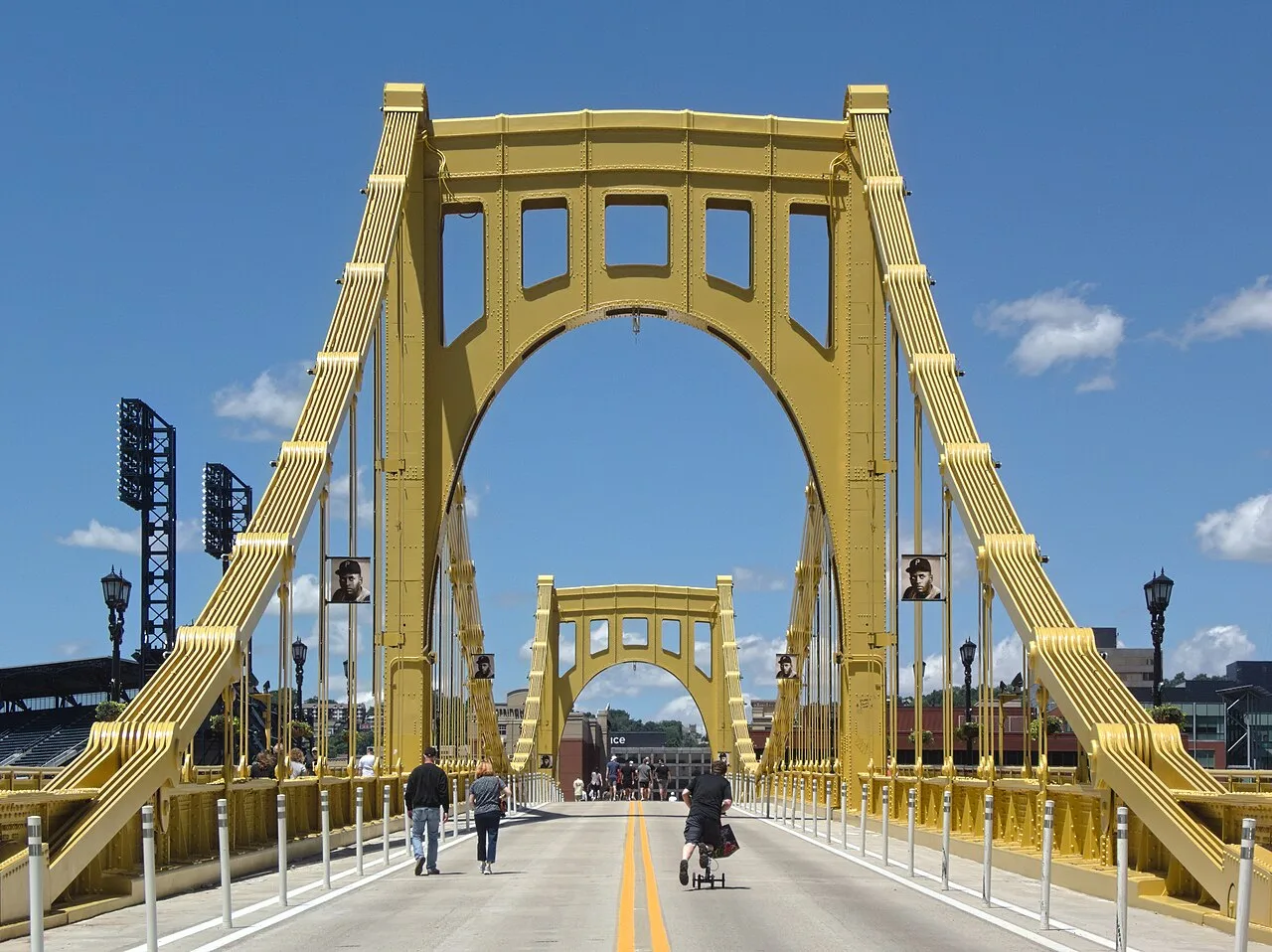

On Oxygen, forensic pathologist Dr. Cyril Wecht and Kevin Gannon raised questions. They said decomposition seemed too light for about 40 days in the water, pointed to what they called possible ligature marks on the neck, and questioned how a body would end up below the Emsworth Dam. Gannon's team also said it found 11 smiley faces on the Roberto Clemente Bridge, but even they concede they can't say whether those were painted before or after Dakota disappeared (The Daily Beast).
That admission matters, and it leads to the people who looked at the theory and said it doesn't hold up.
The case against the Smiley Face Killers theory
The FBI (2008)
On April 29, 2008, days after the story broke nationally, the FBI issued a statement through Supervisory Special Agent Richard Kolko:
"We have not developed any evidence to support links between these tragic deaths or any evidence substantiating the theory that these deaths are the work of a serial killer or killers. The vast majority of these instances appear to be alcohol-related drownings."
Center for Homicide Research (2010)
In 2010 the Center for Homicide Research published "Drowning the Smiley Face Murder Theory." Its main points:
- No timeline. Some graffiti was faded, and some was found months after a death, so there's no way to know whether it came first.
- Graffiti is everywhere. Under almost any American bridge you can find spray paint.
- No two smileys match. A true signature would usually be consistent.
- "Sinsinawa" is a common Midwest place name, not a code.
- No distance rule. If a smiley a block away counts and one a mile away counts too, almost any site will eventually have one.
- Most victims showed no trauma, and homicide by drowning is rare.
It also noted that between 2006 and 2010, La Crosse police patrols stopped more than 50 intoxicated people from reaching the river, strong evidence that the danger was real and came from cold, dark water near the bars.
Medical examiners and police
Taken together: Homan was ruled accidental with intoxication contributing; James accidental; Geib accidental per Michigan State Police; Kapfer, Geesey and Dion were all heavily intoxicated with no signs of attack; Bolanos's preliminary autopsy indicated accidental drowning; Booth's was ruled accidental; Hurley's was described as not suspicious; Kruziki's and McNeill's were undetermined. Fortney survived, with no foul play found. And Chris Jenkins, the one official homicide, was declared unrelated by the police who reclassified it.
Weighing it fairly
None of that makes the families wrong to ask questions. "Accidental" doesn't explain how someone ended up in the water, and some families still don't have that answer. The detectives deserve credit for keeping attention on young men whose deaths were quickly filed away, and the Jenkins reclassification shows that early assumptions can be wrong. But questions are not proof, and in almost twenty years no one has publicly produced evidence of a gang, a cult or a ritual.
What remains: the book, the TV series and the movie
The theory never went away. In 2014, Gannon and Gilbertson published Case Studies in Drowning Forensics (CRC Press), a roughly 460-page book covering 13 bodies and one survivor. In 2019, Oxygen aired the six-episode series Smiley Face Killers: The Hunt for Justice, featuring Gannon.
In 2020 a movie called Smiley Face Killers was released, directed by Tim Hunter and written by Bret Easton Ellis. That film is fiction, a slasher only loosely inspired by the theory, not a documentary.
Here's what we know for sure. Young men, many in their early twenties, left bars and never came home. Their families have spent years asking questions. Chris Jenkins's death is officially a homicide, and no one has been charged. Josh Guimond has never been found. What we don't know is whether any of these deaths are connected. The detectives see a cult-like gang behind a grinning symbol. The FBI, medical examiners and independent researchers see a tragic pattern of alcohol and water, and smiley faces that are everywhere.
Whatever you believe, these were sons, brothers and friends. If you have information about any of these cases, contact local law enforcement. And look out for your friends at closing time, especially near the water.
More on Real Name Of: - True crime: real names and cases - Serial killers' real names - Philadelphia's "house of horrors": the Horsch case
FAQ
Are the Smiley Face Killers real? No killer or group has ever been identified or charged. The Smiley Face Killers is a theory put forward by retired NYPD detectives Kevin Gannon and Anthony Duarte and professor D. Lee Gilbertson. The FBI said in 2008 it found no evidence linking the deaths or showing a serial killer.
Who came up with the Smiley Face Killers theory? Kevin Gannon and Anthony Duarte, retired NYPD detectives, with Dr. D. Lee Gilbertson of St. Cloud State University. They went public in April 2008.
Is the Smiley Face Killers a cult? The theory describes a "cult-like" organized gang that uses a smiley face as its signature, and some reported smileys had horns or crowns. Those are the only occult-style details; no ritual or religious cult has ever been documented.
How many victims are linked to the Smiley Face Killers theory? The detectives first claimed 40 young men in 25 cities across 11 states. Later counts put it at about 45. These numbers are the proponents' list, not an official tally.
Was any Smiley Face case ruled a homicide? Yes, one. Minneapolis police reclassified Chris Jenkins's 2002 death as a homicide in November 2006. No one has been charged, and police said it was not related to the other drownings.
What did the FBI say about the Smiley Face Killers? On April 29, 2008, the FBI said it had found no evidence linking the deaths or supporting a serial killer, and that most appeared to be alcohol-related drownings.
Is the 2020 movie Smiley Face Killers a true story? No. The 2020 film, directed by Tim Hunter and written by Bret Easton Ellis, is a fictional slasher only loosely inspired by the theory.
Is Dakota James from Pittsburgh a Smiley Face Killers victim? The detectives include Dakota James's 2017 death on their list, but the Allegheny County Medical Examiner ruled it an accidental drowning, and the team admits it can't date the smileys it says it found on the Roberto Clemente Bridge.
Disclaimer: This article describes a theory. No court, FBI office or medical examiner has confirmed a link between these deaths, and no living person is accused of any crime here. Graffiti images are illustrations, not crime-scene photos.